
Project Overview:
Case Study: Babcock Rosyth – Hydro-Pneumatic Submarine Fender Supply
Project: Supply and Install of Hydro-Pneumatic Fenders
Location: Rosyth Dockyard, Dunfermline, UK
The Challenge: Protecting Sub-Surface Assets
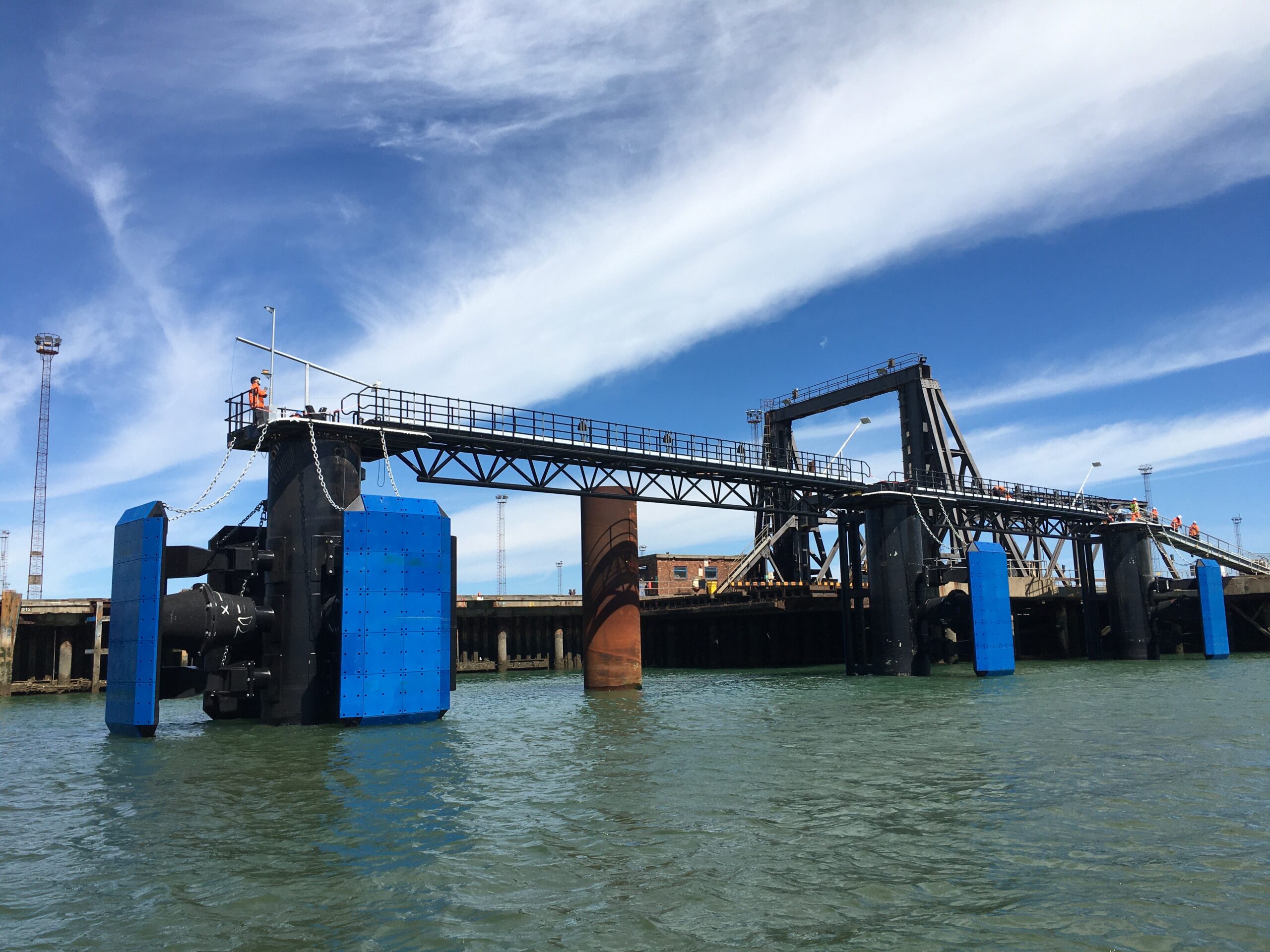
Submarine berthing presents a highly specific engineering challenge that standard floating fenders cannot meet. Due to the unique hull geometry and the requirement for energy absorption below the waterline, a conventional pneumatic fender would ride too high in the water, failing to provide protection at the critical point of impact. For the Rosyth Dockyard, the requirement was a stable, heavy-duty solution designed specifically for naval submarine operations, capable of performing reliably in the demanding environment of the Firth of Forth.
The DockGuard Solution
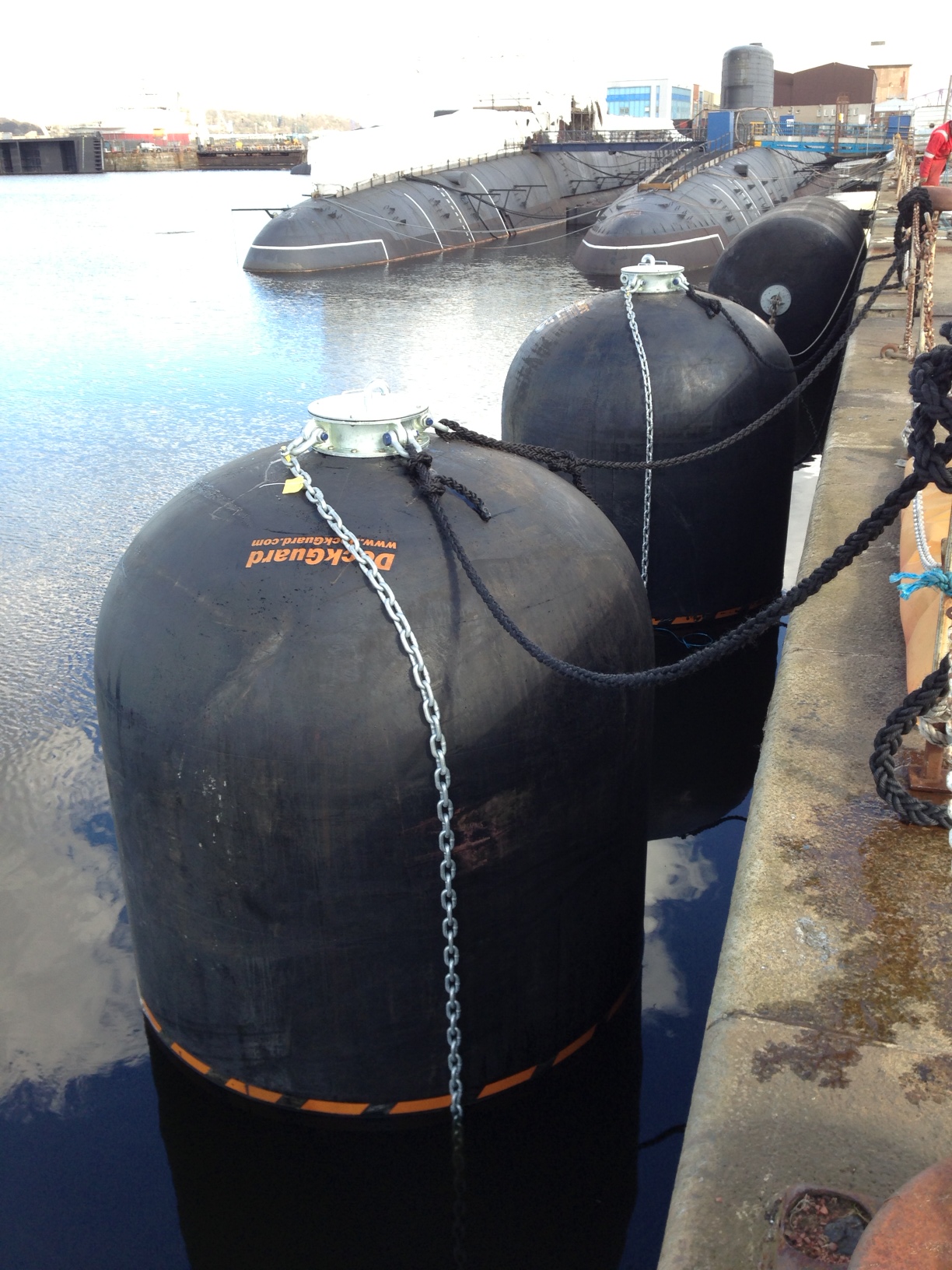
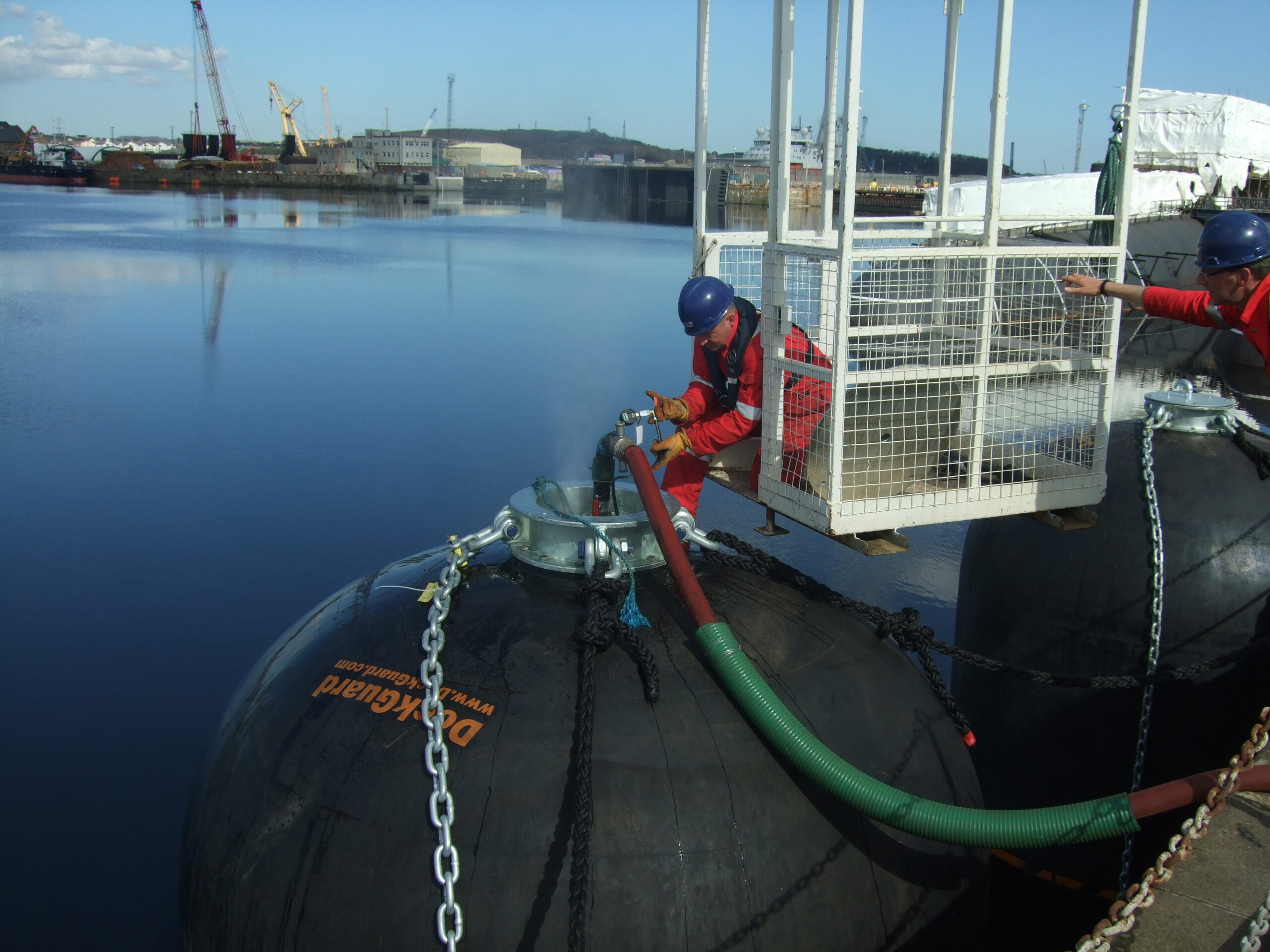
Through our specialized division, we supplied a pair of high-performance Hydro-Pneumatic Fenders. These units are specifically engineered for submarine applications where the fender must remain partially submerged to contact the vessel’s hull at the appropriate depth. Unlike standard fenders, these units utilize a water-ballast system to achieve the necessary vertical orientation and stability required for safe naval berthing.
Key System Components:
2 No. Hydro-Pneumatic Fenders: Specialized units measuring Ø3.3m diameter x 10.6m length.
Water Ballast System: Designed to be partially filled with water to control buoyancy, ensuring the fender remains vertical and provides protection deep below the waterline.
ISO 17357-1:2014 Certified: Manufactured and tested to the latest international standards for floating pneumatic rubber fenders to ensure absolute compliance with naval safety protocols.
Heavy-Duty Mooring: Supplied with 50mm diameter x 5m long galvanised open-link mooring chains, complete with shackles and swivels for secure installation.
Internal Pressure Control: Set to an operating pressure of 50kPa to provide the necessary cushioning for sensitive naval hulls.
Engineering Highlight: The Hydro-Pneumatic Advantage
The defining feature of these fenders is the balance between internal air pressure and water ballast. By filling the internal bladder with water, the unit is weighted to stand vertically in the water column. This ensures that the Fender is positioned precisely where the submarine hull makes contact, preventing the fender from “over-riding” the vessel. This specialized design provides a stable, predictable berthing face that is essential for protecting the integrity of sub-surface assets.
Project Outcome
Delivered to the Rosyth site to support critical naval infrastructure, these hydro-pneumatic units offer a dedicated solution for submarine berthing. By focusing on sub-surface energy absorption and maintaining a vertical profile, the fenders provide the high-performance protection necessary for the UK’s naval fleet. The adherence to ISO 17357-1:2014 ensures that these systems meet the rigorous safety and durability standards required for long-term dockyard service.

 EN
EN  ES
ES  FR
FR