
Project Overview:
Case Study: Lowestoft Eastern Energy Facility (LEEF)
Project: Supply of Pneumatic Fenders, Mooring Bollards, Safety Ladders, and Quay Accessories
Location: Outer Harbour, Port of Lowestoft, Suffolk,
UK Contractor: McLaughlin & Harvey Client: Associated British Ports (ABP)
The Challenge: Equipping a New Offshore Energy Hub
The Lowestoft Eastern Energy Facility is a transformative £35 million port redevelopment, purpose-built to support operations and maintenance for the Southern North Sea offshore wind industry. The project delivered 345 metres of upgraded deep-water quayside with three berths capable of accommodating Service Operations Vessels, Platform Supply Vessels, and Walk-to-Work vessels at all tidal states, with a minimum draft of 7.5 metres.
With vessels of varying size and displacement using the facility — from crew transfer vessels through to large SOVs — the fendering solution needed to deliver reliable energy absorption across a wide range of berthing scenarios, while the mooring and safety equipment had to meet the exacting standards expected of a modern, high-traffic commercial port.
The DockGuard Solution
DockGuard was awarded the contract by McLaughlin & Harvey to supply a comprehensive package of pneumatic fenders, mooring bollards, safety ladders, and quayside safety equipment. The scope covered the full berthing and mooring infrastructure for the new quayside, delivered as a complete turnkey supply to site..
Key System Components:
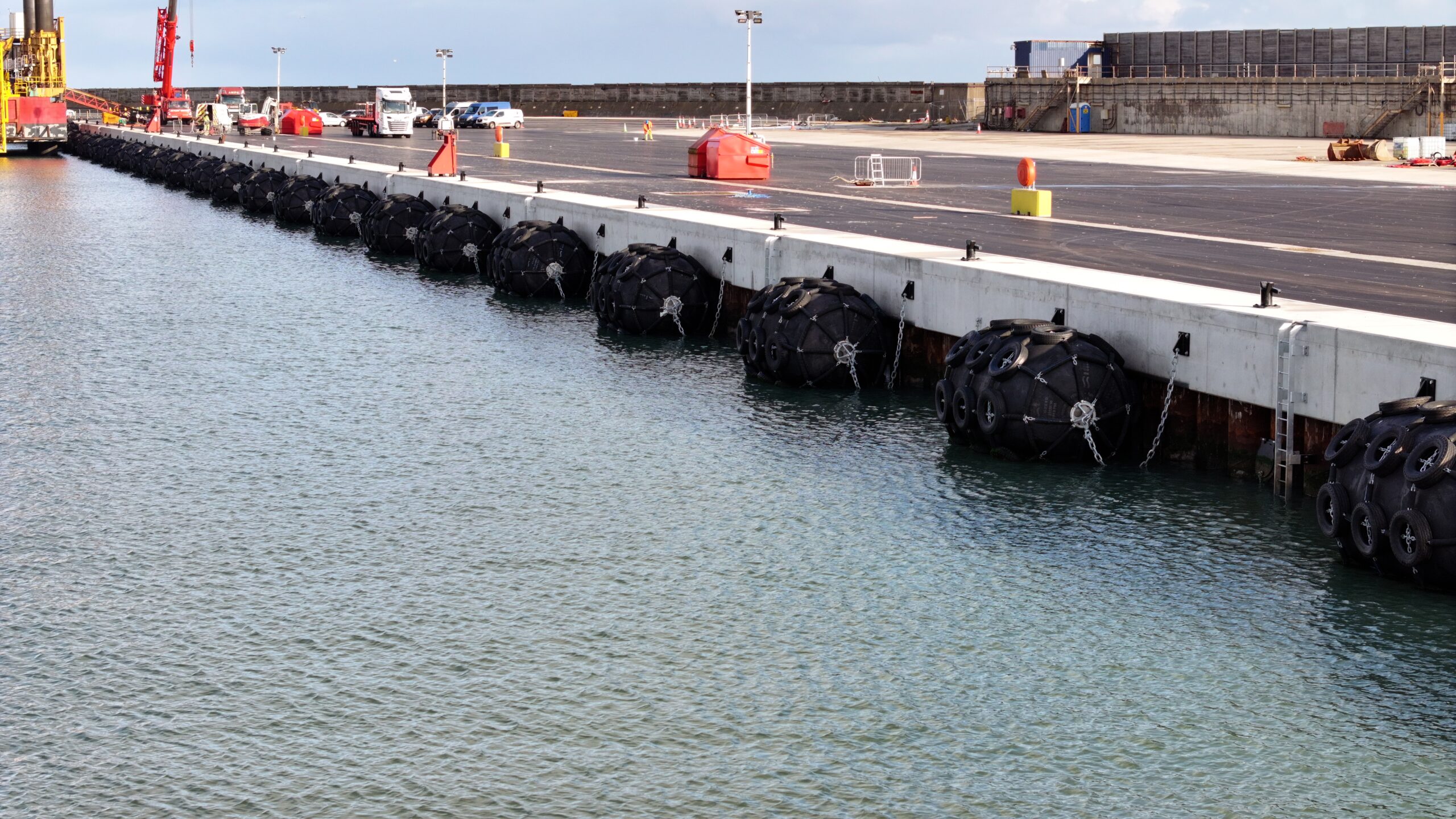
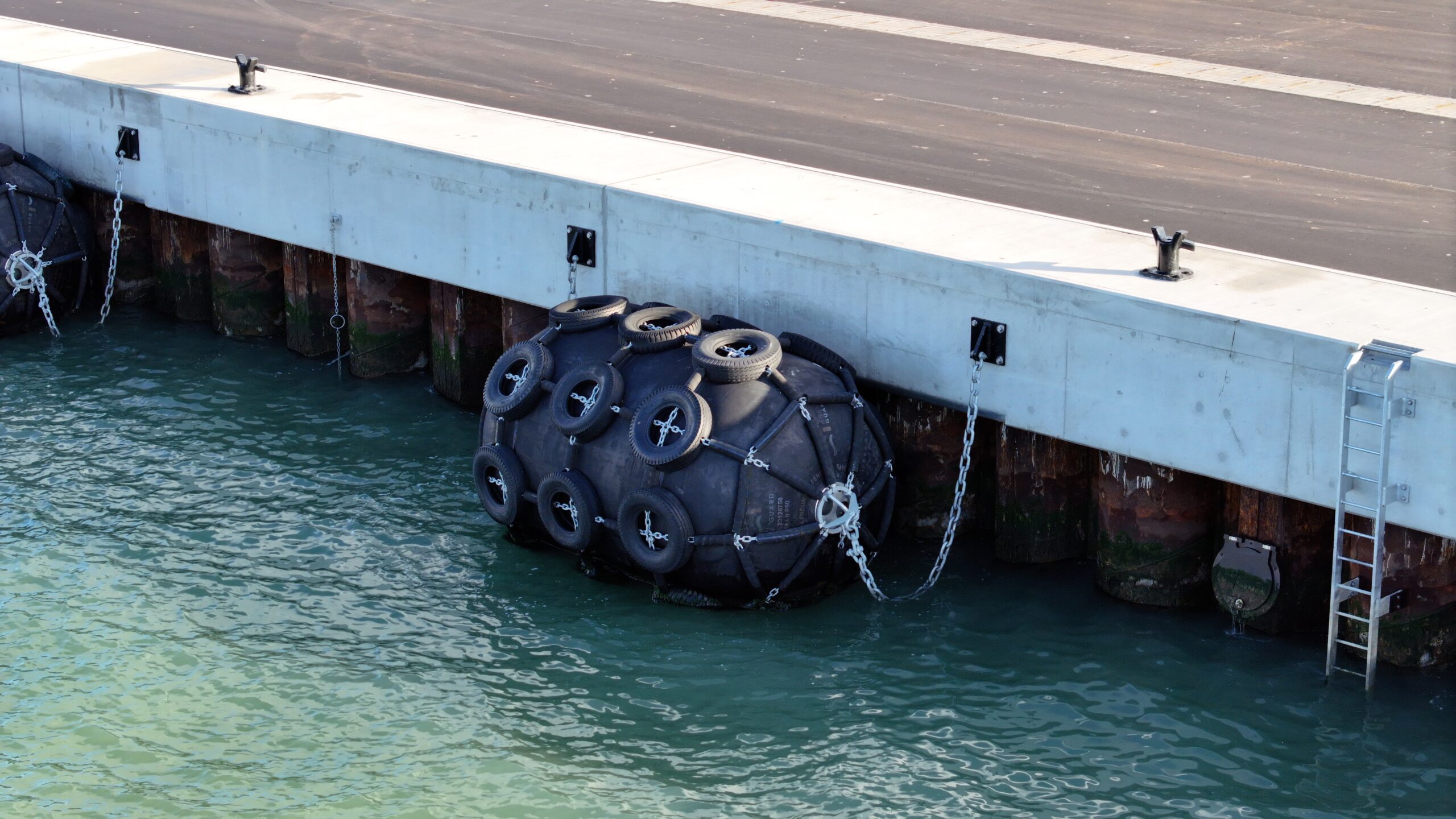
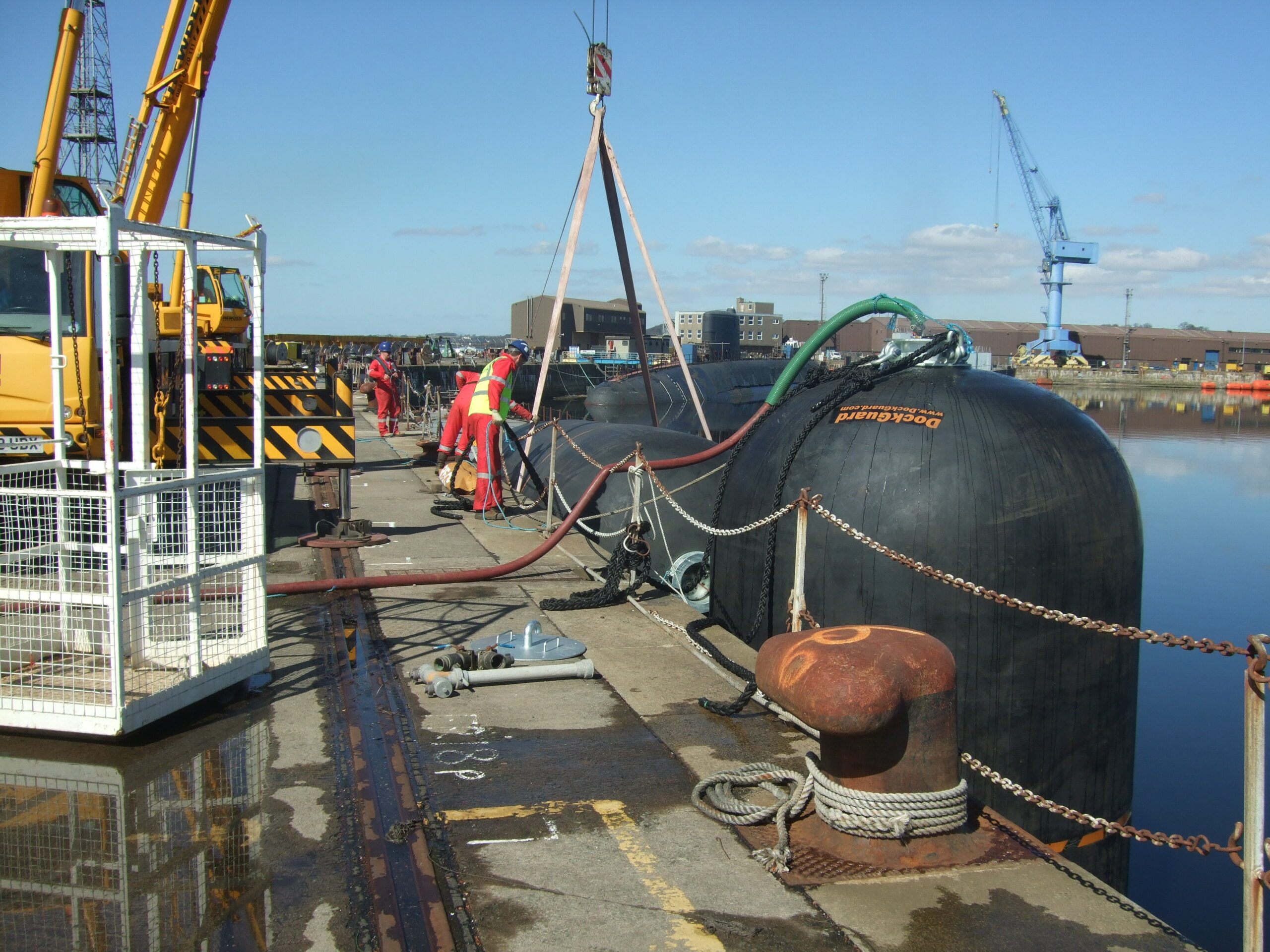
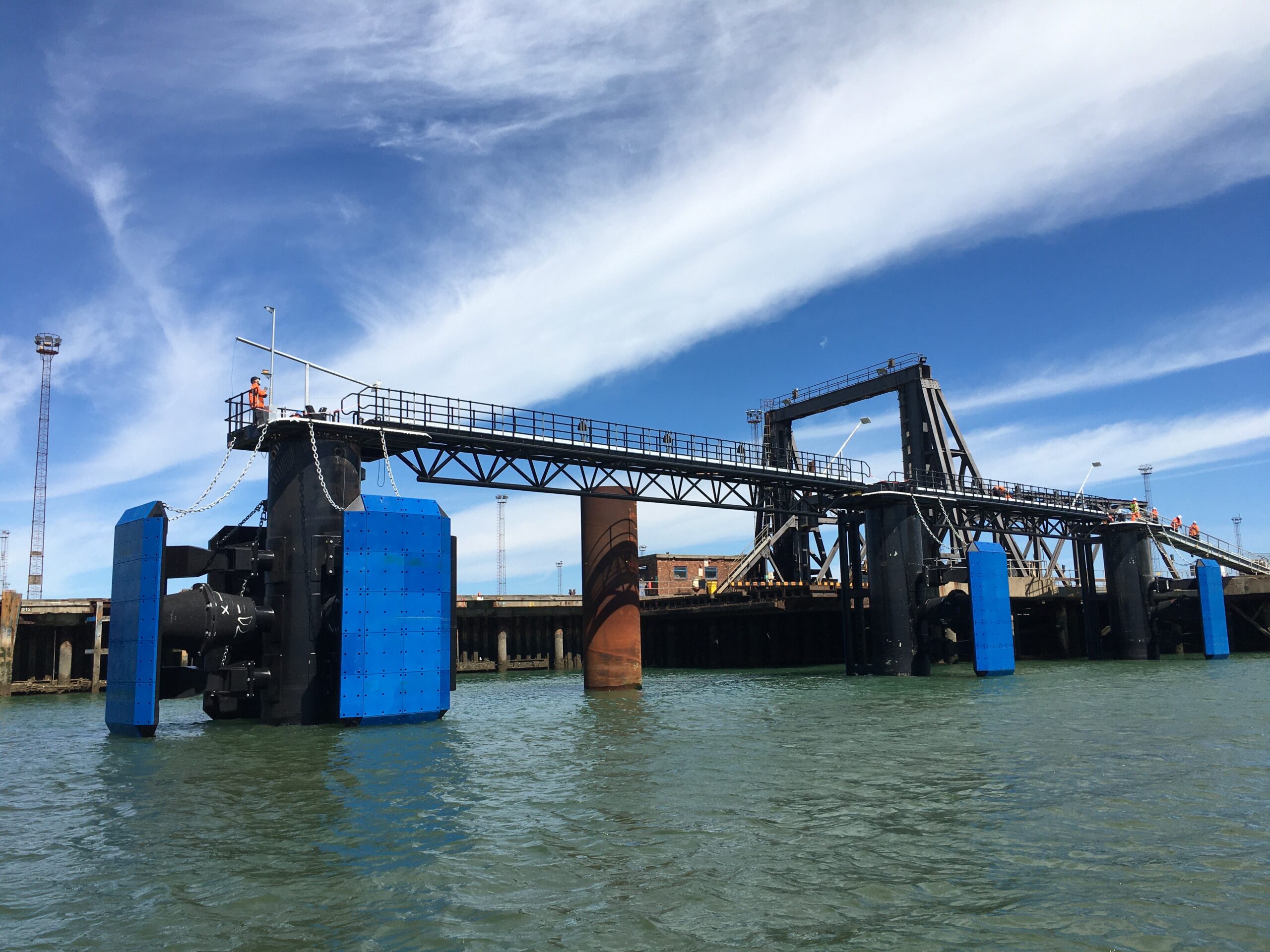
25 Pneumatic Fenders — comprising 23 No. DockGuard P50 and 2 No. DockGuard P80 units, each measuring Ø2500mm x 4000mm long. The P50 fenders deliver a minimum energy absorption of 660 kNm at an internal operating pressure of 50kPa, while the two P80 units provide enhanced performance at 931 kNm for higher-energy berths. All fenders were supplied with high-protection galvanised chain and truck tyre nets, stainless steel end plates with inflation and safety valves, and galvanised shackle and swivel arrangements. Each fender was delivered with an emergency repair kit and full ISO 17357-1:2014 certification issued by an independent third-party accreditation agency.
25 Sets of Mooring Accessories
27 Staghorn Mooring Bollards — 26 No. rated at 30 tonnes and 1 No. rated at 50 tonnes. All bollards were cast from SGI QT450-10 grade iron, shotblasted to SA2.5 and painted, supplied with galvanised bolt sets and accompanied by full load testing and certification.
14 Fabricated Safety Ladders — Complete with all necessary brackets, bolts, stainless steel cast-in fixings and hand grips. Galvanised and painted black to ISO 12944-CX corrosion protection standard, designed specifically to suit the quay profile.
4 Life Ring Stations — Ø30″ foam filled life rings with minimum 181N buoyancy, each supplied with 30m buoyant line and storage cabinet.
12 Galvanised Safety Chains — Ø6mm x 3825mm with hoops, links, M20 bolts, and cast-in socket anchor sets for quayside edge protection.
Engineering Highlight: Dual-Pressure Fender Configuration
A key feature of the LEEF fender scheme was the use of two different operating pressures within the same fender diameter. By deploying 23 standard-pressure P50 units alongside 2 higher-pressure P80 units, DockGuard was able to provide enhanced energy absorption at specific high-load berth positions without increasing the physical fender size. This approach allowed McLaughlin & Harvey to maintain a consistent quayside profile and vessel standoff distance across the full length of the berth, while ensuring that the berths most exposed to larger vessel impacts had the additional capacity required — a practical and cost-effective engineering solution.
Project Outcome
Officially opened in January 2025 by the Secretary of State for Energy Security and Net Zero, the LEEF facility has exceeded expectations in its first year of operation, welcoming hundreds of new vessels and supporting offshore wind farms including East Anglia ONE and Greater Gabbard. DockGuard’s comprehensive supply package — from pneumatic fenders through to bollards, ladders, and safety equipment — helped equip what is now a flagship facility for the UK’s offshore energy sector, reinforcing the Port of Lowestoft’s position as the UK’s most easterly energy hub.
 EN
EN  ES
ES  FR
FR